

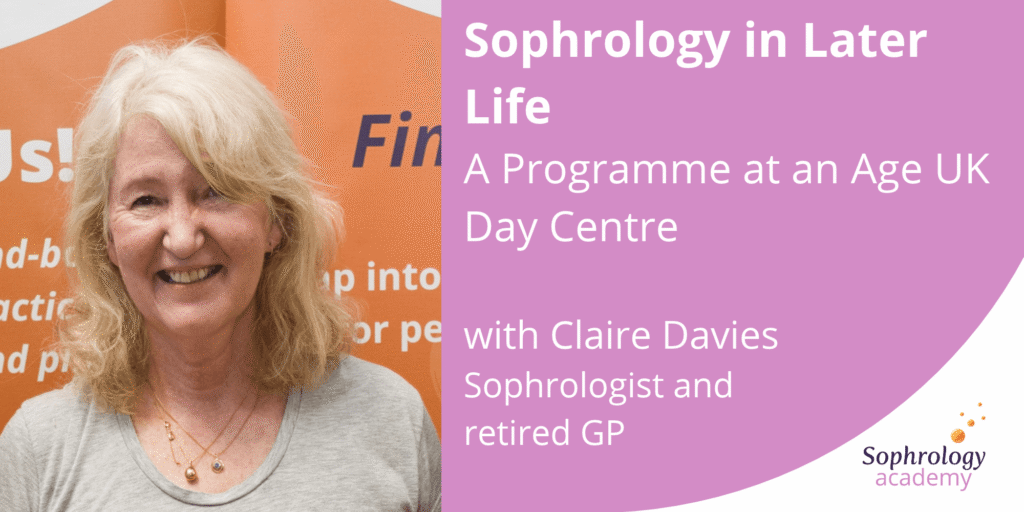
A student programme with older adults at an Age UK day centre
Picking up knitting again and wearing a much loved colour. Making beadwork and planning a craft stall. Taking pleasure in movement that had previously felt difficult. These were some of the changes recorded during a sophrology group led by one of our students as part of her Practitioner Diploma training.
The programme offered older adults a gentle space to reconnect with themselves and with one another. Their experiences show how meaningful wellbeing can be in everyday life: feeling calmer, rediscovering something enjoyable, or finding the confidence to try again.
A space to pause and feel valued
Eight sessions took place between March and June 2026 at a day centre in Tunbridge Wells. Participants were aged between 72 and 94 and attended the centre for companionship and support with loneliness and social isolation. Early wellbeing questionnaires highlighted concerns about ageing and declining physical health, alongside difficulties with emotional wellbeing.
The 90 minute sessions allowed plenty of time for practice and conversation. Attendance varied initially, with eight people at the first session and nine at the second, before a smaller, regular group developed. Hospital appointments, illness and a simultaneous exercise class affected attendance.
The emphasis was on how each person felt, with no pressure to perform an exercise correctly. Gentle movement, body awareness, relaxation and positive imagery were adapted to individual needs, with most activities taking place seated. Participants could work within their own comfort and abilities.
Rediscovering enjoyment and confidence
One participant, who was recovering from a stroke, described feeling less uptight as the programme progressed. She became more intentional about moving her affected side and was keen to demonstrate each new movement she could manage. The facilitator recorded her pleasure at being able to lift her arm further. She also arrived at one session reporting that she had been singing songs from Oklahoma, including “Oh, What a Beautiful Mornin’”.
Her enjoyment extended into making things again. Later, she brought the facilitator an intricate beadwork bookmark she had made as a gesture of appreciation for the progress she felt she had made. She had also created other pieces and booked a stall at a local craft fair. Her delight in what she could do was finding expression in creativity and plans for the future. Although changes in movement were reported and observed, this programme cannot establish what contributed to her physical recovery.
Another participant, initially quieter in the group, rediscovered her love of pink. Imagining beautiful colours brought back happy memories of childhood holidays and a sense of freedom. In later sessions, she had begun knitting again and was wearing jewellery, mostly pink. The facilitator also described her making new pink clothes through her knitting. A colour she had always loved was becoming part of everyday life again, through both what she made and what she wore. As she grew more comfortable in the group, she spoke more readily about her experiences and described a confidence building practice as something she could use herself.
Feeling calmer and more at home in the body
Participants described deep relaxation during guided practices. They became more confident in noticing areas of tension and finding ways to release it. Some reported feeling less discomfort during sessions; others spoke about feeling lighter emotionally and “almost free”.
Familiar music, remembered gardens and happy moments from earlier life also brought pleasure into the sessions. Participants spoke of feeling younger as they recalled favourite songs. Conversations turned towards small sources of enjoyment available now: a pet, the view from a window, or something noticed on the journey to the centre.
Short practices gave participants something to take into daily life. Some had already begun practising body awareness at home before a printed guide to micropractices was introduced. Later, participants reported using a seated grounding practice between sessions and feeling that their posture had improved.
The value of practising together
The group became increasingly supportive. Participants listened to one another, shared memories and celebrated each other’s progress. Laughter was a recurring part of the sessions, and the facilitator observed growing confidence within the group.
At the final meeting, one participant said she was sad that the sessions were ending. When choosing a calming word, participants gravitated towards “calm” and “peace”. Alongside the individual practices, the regular opportunity to be heard and to belong appeared to be an important part of their experience.
What this experience offers
This was a small student practice programme, rather than a controlled research study. The account draws on the facilitator’s observations and participants’ verbal feedback; it does not provide measured evidence of clinical effectiveness or show that sophrology alone caused the changes described.
It does offer a thoughtful example of how an accessible sophrology group can support the experience of later life. The benefits participants described were personal and concrete: more calm, greater confidence, a sense of connection and the joy of rediscovering things they loved. Whether expressed in a newly possible movement, an intricate piece of beadwork or the pleasure of wearing pink, these moments mattered. Their stories remind us that opportunities to discover, create and feel more fully ourselves remain valuable at every age.
Five months later
When the facilitator returned to the centre five months later, members of the core group reported that they were still using the short practices they had learnt. One participant was still knitting in her favourite shades of pink. Yet they missed being guided through the sessions and the feeling of having “their time”, when they could put their worries aside.
One woman said that her mood had declined. Although she could recognise when she was worrying, she felt she would benefit from further sessions. The centre manager had also noticed that some participants missed the group and felt that several new members might benefit from joining a future programme.
The follow-up conversations suggested that the combination of guided practice and shared experience had been particularly valuable. Positive visualisations had opened up a rich landscape of memories, prompting stories, laughter and connection. Participants found these experiences harder to access without guidance. Some recalled that, during the visualisations, they had felt able to forget their arthritis for a while and do more than they expected.
The visit raised useful questions about how this support might continue. Could similar programmes be offered in other centres for older adults? Could suitable recordings help participants practise between sessions, perhaps together at the centre? Any such approach would need to consider ease of access and preserve time for conversation and sharing, which had been among the most valued aspects of the group.
These reflections point to the value of continuity. Short practices gave participants something they could use independently, while the guided group offered time, companionship and encouragement that they continued to miss. The follow-up is a reminder that the opportunity to experience joy and connection together can matter just as much as having tools to practise alone.
Claire Davies is now a qualified Sophrologist and retired General Practitioner (family doctor) based in Kent, UK. She has always been comfortable working with the elderly starting in her first job as an auxiliary nurse, through to her GP partnership role, and then ultimately in the front line work she’s done repatriating elderly patients so that they can rest in peace where they choose.